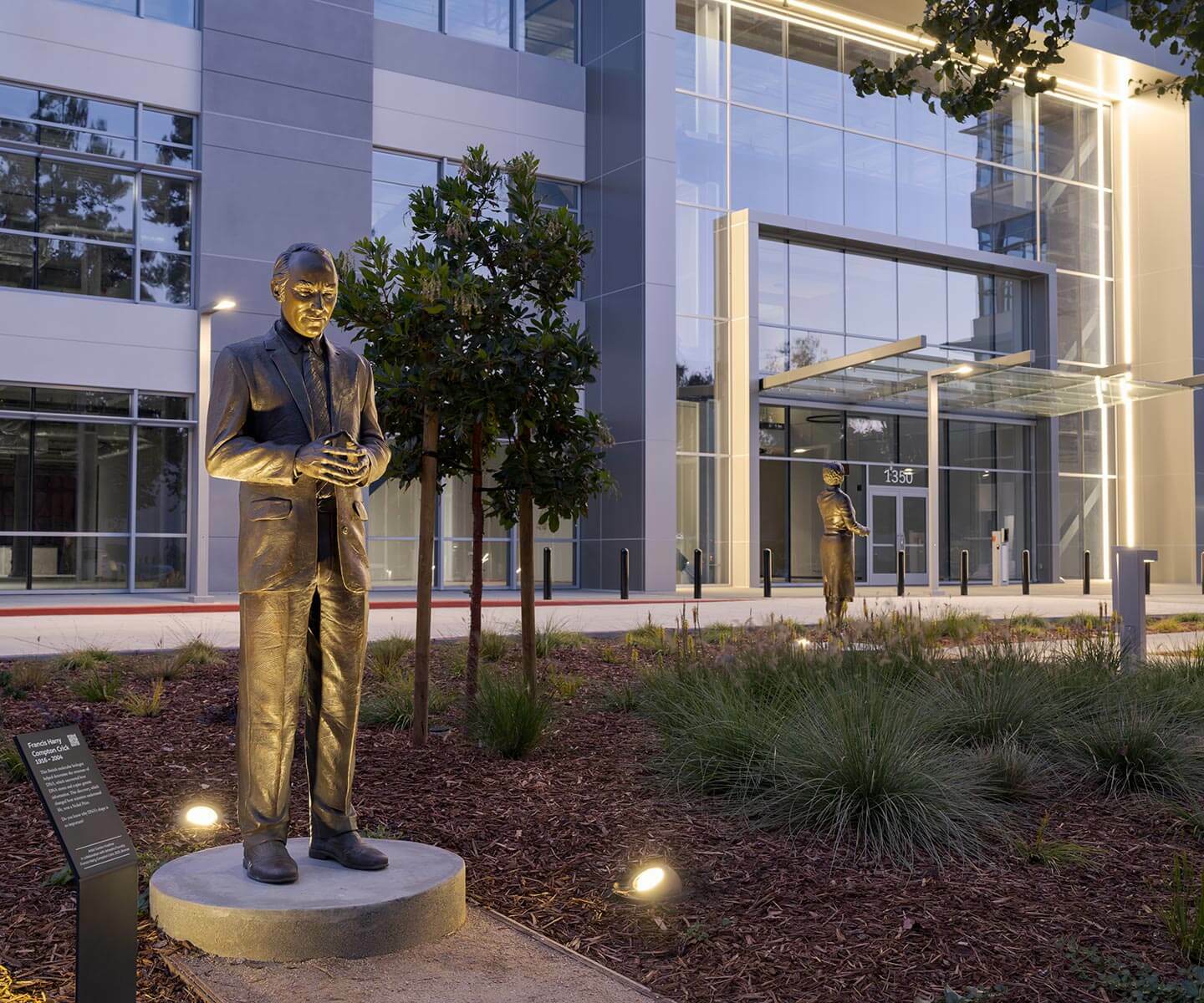
Introducing the Innovators Art Walk at Menlo Park Labs
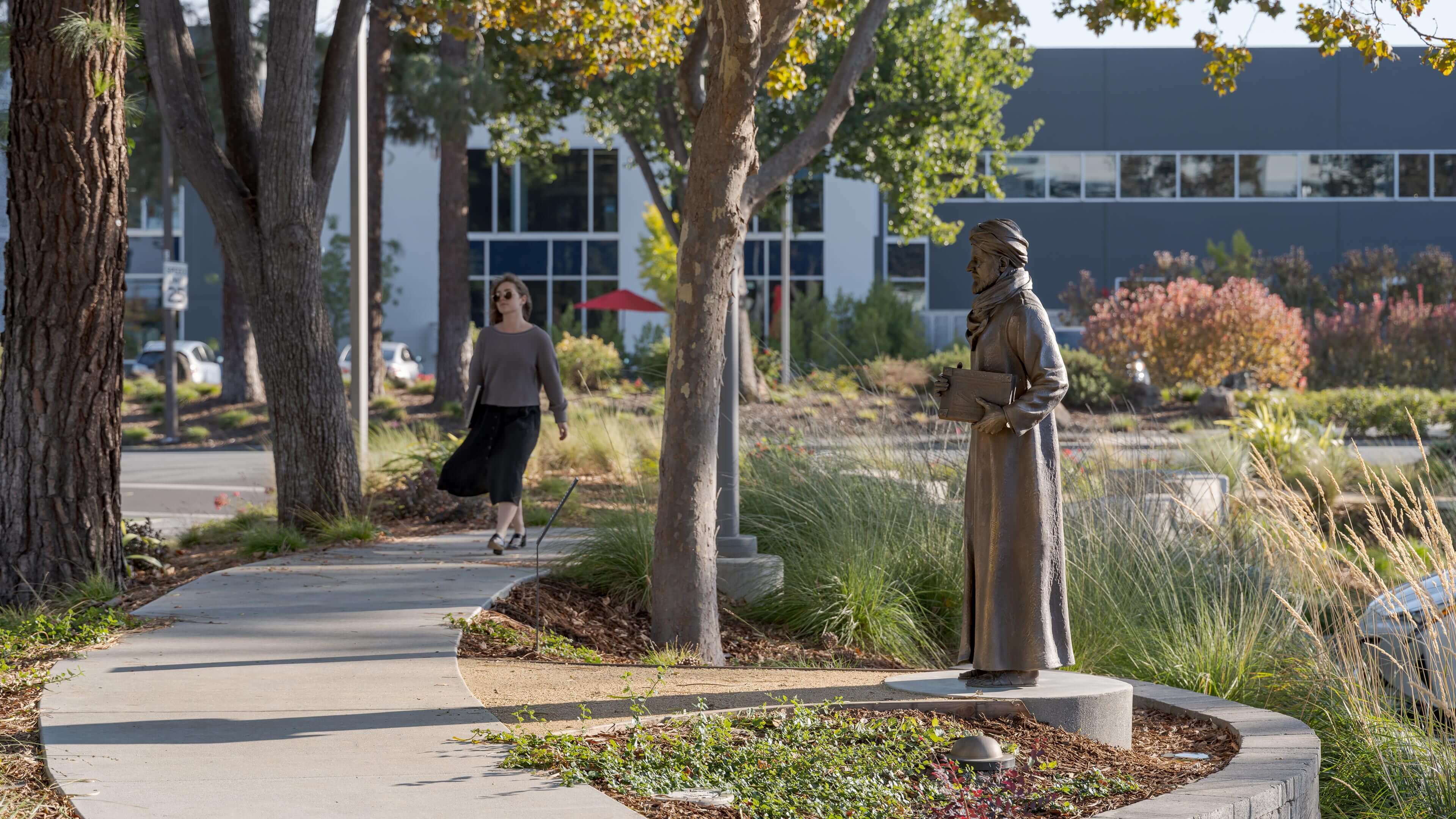
We’re thrilled to announce the launch of the Innovators Art Walk, a new art installation at Menlo Park Labs that celebrates some of history’s greatest scientific thinkers. Winding through a shaded path on our campus, this collection of life-sized bronze sculptures honors a diverse group of scientists whose groundbreaking work has shaped medicine, biology, chemistry, and more.
Designed by artist Gordon Huether, the walk creates moments of reflection and inspiration—a tribute to the giants whose discoveries make today’s innovations possible.
Meet the Innovators
Al-Zahrawi (936–1013)
A pioneering Arab surgeon of the Islamic Golden Age, Al-Zahrawi wrote a 30-volume medical encyclopedia that became the standard surgical reference in Europe for centuries and transformed surgery into a teachable science.
Avicenna (980–1037)
A Persian polymath, Avicenna authored the Canon of Medicine, a systematic medical text that taught doctors how to examine patients, diagnose disease, and apply evidence-based treatment long before it was common practice.
Daniel Hale Williams (1856–1931)
Dr. Williams was a trailblazing American surgeon who founded Provident Hospital — the first integrated hospital in the U.S. — and performed one of the earliest successful open-heart surgeries, challenging both medical and social barriers.
Marie Curie (1867–1934)
A two-time Nobel Prize winner, Curie discovered radium and polonium and pioneered research on radioactivity, laying the groundwork for medical imaging and cancer treatments that save lives today.
Percy Lavon Julian (1899–1975)
An influential chemist, Julian developed affordable ways to produce important hormones and medicines, earning more than 130 patents and revolutionizing pharmaceutical chemistry.
Charles Drew (1904–1950)
Dr. Drew’s work on blood plasma storage and transport helped create modern blood banks and “bloodmobiles,” making safe transfusions widely available and transforming emergency medicine.
Maurice Wilkins (1916–2004)
A Nobel-winning physicist, Wilkins used X-ray imaging to help reveal the spiral structure of DNA, contributing key insights that helped decode life’s blueprint.
Francis Harry Compton Crick (1916–2004)
Alongside James Watson, Crick built the first accurate DNA double-helix model, opening the door to modern genetics, biotechnology, forensics, and countless scientific advances.
Rosalind Franklin (1920–1958)
Franklin’s precise X-ray images of DNA — especially “Photo 51” — provided essential data that made the discovery of DNA’s structure possible and paved the way for modern molecular biology.
We invite you to take a walk through history and innovation at Menlo Park Labs, where these remarkable figures now stand as inspirations for the next generation of thinkers and doers.
Let us know what you think… and happy exploring!